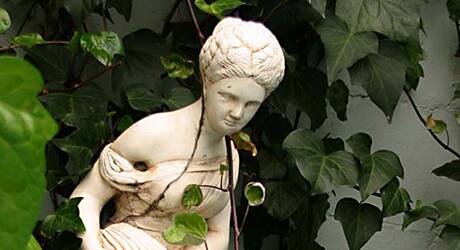
How To Secure Your Garden Statues - How To Secure An Outdoor Resin Statue Hunker Statue Outdoor Outdoor Space Design / Trace around the statue base on the cement.. Concrete gnomes and rebar reindeer are not likely to blow away in the wind, but they may topple—secure heavy, but narrow, vertical decorations with slender rods fastened to the backs using a compatible material (i.e., cement, metal weld, epoxy or even wire or duct tape for temporary decorations). How to seal outdoor statues. For fountains, first remove the statue and pump, storing them inside if possible. Lay a sheet of 'chicken wire' inside the larger hole. Sealants make paint last longer and prevent it from flaking off.
And, the resin statues are suitable for indoor and outdoor use. Lay a sheet of 'chicken wire' inside the larger hole. They have a greater strength than some of the other materials that can be cast. Drill holes for anchor bolts around the outline. Coat painted outdoor statues with liquid car wax to protect the surface.
Tips For Adding Sculpture To Your Yard Or Garden Hgtv from hgtvhome.sndimg.com However, all sculptures, whether stone, metal, bronze, cement or ceramics, are subject to storm damage. Sealants make paint last longer and prevent it from flaking off. Fill the bowls with an underlayment such as burlap bags, blanket, old bed sheets, some type of absorbent material. Place the concrete statue on a ventilated surface, such as gravel or rock, when you apply the sealant. Use a concrete or masonry sealer on stone statues to protect them from the elements. Continue reading below our video of the day click here to purchase garden ornaments. Fencing is the most effective (and sometimes only!) way to keep unwanted visitors out of your garden. Using a waterproof, uv resistant sealer will protect it from the sun and rain.
Use a minimum of three bolts spaced evenly around the base for stability.
Repeat the process a second time for added protection. Use a concrete or masonry sealer on stone statues to protect them from the elements. Many sculptures come with mounting nuts or rods that connect to cement or stone foundations with epoxy glue or threaded bolts to hold them in place. Place the concrete statue on a ventilated surface, such as gravel or rock, when you apply the sealant. A custom statue is installed to give it a strong base so that it will not tip over, or to protect it from theft or vandalism typically this means pouring a pedestal and. Place a level in the center to confirm the area is flat; Back fill the hole for the plant. Where to place garden statues Using a waterproof, uv resistant sealer will protect it from the sun and rain. Drill holes for anchor bolts around the outline. Statuary is generally very durable, but a bit of help from human hands cannot hurt. The statues will experience natural we. This is not the case with custom statuary.
In some cases, it makes sense to start with the statue. How to seal outdoor statues. Fencing is the most effective (and sometimes only!) way to keep unwanted visitors out of your garden. Fill the bowls with an underlayment such as burlap bags, blanket, old bed sheets, some type of absorbent material. Statuary is generally very durable, but a bit of help from human hands cannot hurt.
How To Preserve Protect Resin Based Outdoor Statues Keep Them Looking Like New For Years To Come Youtube from i.ytimg.com Place a level in the center to confirm the area is flat; Many sculptures come with mounting nuts or rods that connect to cement or stone foundations with epoxy glue or threaded bolts to hold them in place. For fountains, first remove the statue and the pump, store them inside a building if possible. Back fill the hole for the plant. Cover a thin layer of portland cement on damp and chipped areas. Let the statue dry for 24 hours. A wide variety of materials is used to create garden art, including concrete or cement, wood, resin, ceramics, porcelain, glass, terracotta and plastic. Put down a tarp, sheet or newspaper under the statue to protect the surface beneath spray the statue with short bursts of spray, releasing the button at the end of each pass cover the entire statue and let stand for 1 hour
Outdoor statues can come in a variety of materials including concrete, marble and bronze.
For fountains, first remove the statue and pump, storing them inside if possible. In this case, you'll place it first and plan your garden around it. Let the statue dry for 24 hours. Many commercially made garden statues are designed to be placed in a landscape with no installation. Use a minimum of three bolts spaced evenly around the base for stability. In some cases, it makes sense to start with the statue. Put down a tarp, sheet or newspaper under the statue to protect the surface beneath spray the statue with short bursts of spray, releasing the button at the end of each pass cover the entire statue and let stand for 1 hour (fran kittek / morning call file lphoto) as winter approaches. However, all sculptures, whether stone, metal, bronze, cement or ceramics, are subject to storm damage. Lay a sheet of 'chicken wire' inside the larger hole. Drill holes for anchor bolts around the outline. Make two cuts across the centre of the chicken wire and fold up the wire to allow the root ball to pass through into the smaller hole that you have dug for the plant. Fill the bowls with an underlayment such as burlap bags, blanket, old bed sheets, some type of absorbent material.
Du weißt, was du suchst, nur nicht wie günstig dein produkt sein kann? For fountains, first remove the statue and the pump, store them inside a building if possible. To maintain the beauty of your garden statues for as long as possible, it's important to give them proper care. Statues and sculptures require careful anchoring. Repeat the process a second time for added protection.
How To Secure Landscape Sculptures The Home Depot from contentgrid.thdstatic.com Precautionary steps should be taken to protect and preserve your garden art so that it remains beautiful for many years. You can also keep them in exposed areas if you coat them with liquid car wax. Lay a sheet of 'chicken wire' inside the larger hole. For fountains, first remove the statue and pump, storing them inside if possible. Secure resin garden statues to nearby fencing, trees or permanent fixtures, using chains and padlocks to prevent thieves from walking away with your possessions. In unserem preisvergleich findest du aktuelle preise zu produkten deiner wahl. Let the statue dry for 24 hours. Don't paint the underside of the statue with sealer.
Sealing your statues from year to year is a good practice to have.
Protect your work surface with a dropcloth and lay the item flat. Let the statue dry for 24 hours. While bolts and locks keep the doors tightly fastened, some of the most. Leave it there for 24 hours to dry. You can also keep them in exposed areas if you coat them with liquid car wax. Continue reading below our video of the day click here to purchase garden ornaments. Where to place garden statues Du weißt, was du suchst, nur nicht wie günstig dein produkt sein kann? Lay a sheet of 'chicken wire' inside the larger hole. Statues and sculptures require careful anchoring. Concrete gnomes and rebar reindeer are not likely to blow away in the wind, but they may topple—secure heavy, but narrow, vertical decorations with slender rods fastened to the backs using a compatible material (i.e., cement, metal weld, epoxy or even wire or duct tape for temporary decorations). For fountains, first remove the statue and the pump, store them inside a building if possible. That will help the longevity of your statue and its paint.